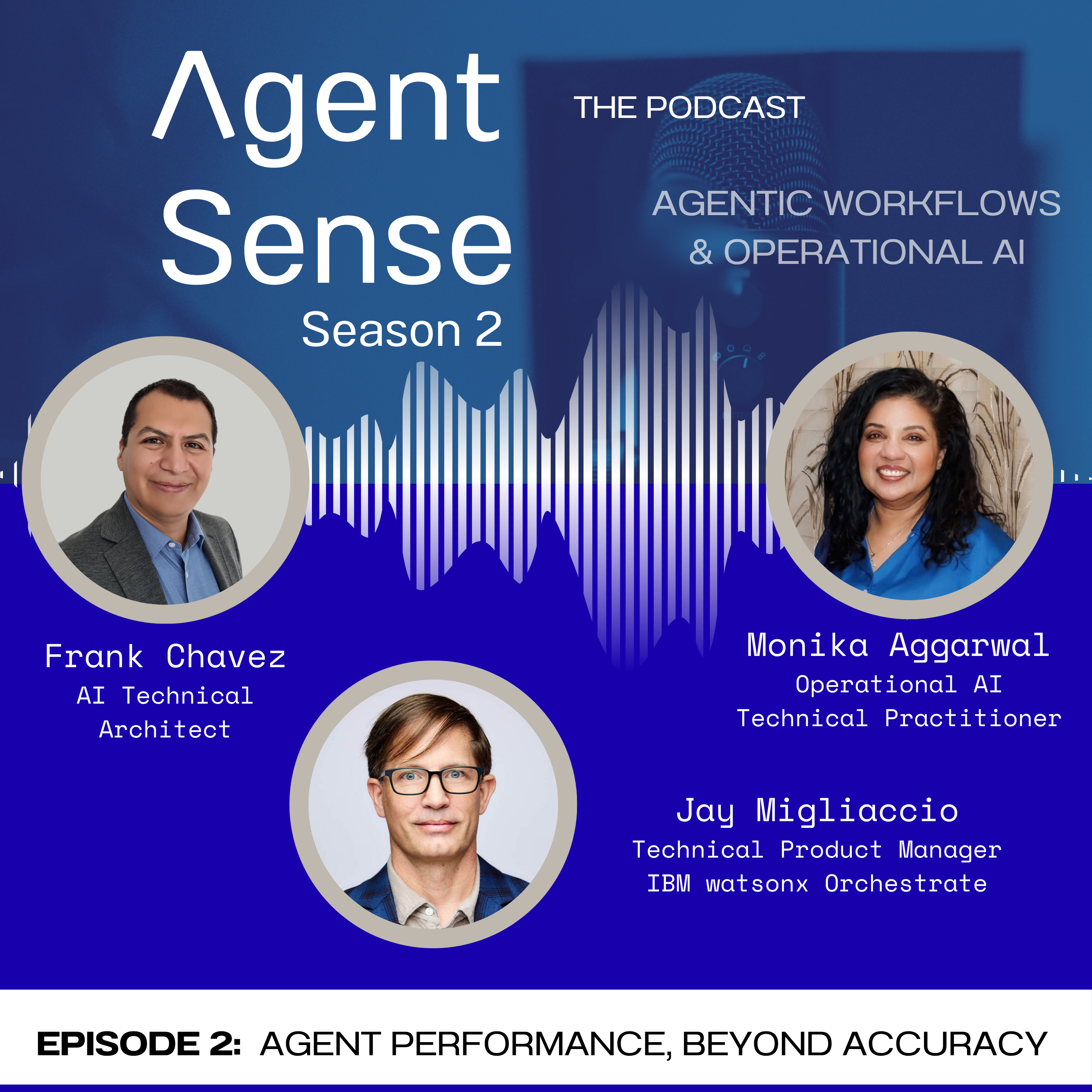
Agent Performance, Beyond Accuracy
Guest: Jay Migliaccio — Technical Product Manager, IBM watsonx Orchestrate
An AI agent can be 95% accurate and still fail the business. It can give the right answer and still take too long, use the wrong tool, cost too much, or fail to complete the task. We talk with Jay Migliaccio, about how enterprises should measure and improve agent performance.
The Enterprise Arc of Agent Sense
Each episode follows the enterprise journey from prototype to production operation — covering the layers that make agents reliable, governed, and safe to scale.
- Readiness: What breaks when agents leave demos
- Boundaries: Where rules, agents, and human judgment belong
- Data: Why bad data makes agents unsafe
- Data layer autonomy: Where autonomous action helps and where it creates risk
- Integration: How agents coordinate across enterprise systems
- Control: Why agents need gateways before reaching core systems
- Execution: What changes when agents move from chat to computer use
- Governed Scale: Why enterprises need catalogs for agents, tools, and MCP servers
- Conversation to Action: How AI moves from summarizing meetings to driving workflow execution
- Ambient Agents: What changes when agents shift from on-demand to always-on, event-driven operation
- Agent Memory: Why RAG alone isn't enough and what a real enterprise memory system — with ingestion, distillation, and graph relationships — actually looks like
- Agent Performance: Why accuracy alone is misleading and how to measure what agents actually deliver — task completion, latency, cost, and user outcomes — and trace failures to the right layer
Agent Sense Hosts

Co-Host & Creator
Enterprise AI technical practitioner focused on moving agents from demos into governed operating models. Her work spans architecture, data, workflow automation, and adoption across healthcare, financial services, energy, and IBM software. Agent Sense reflects her field perspective on what it takes to make enterprise AI reliable in production.
Driving business outcomes one practical tip a day.
Co-Host & Practitioner
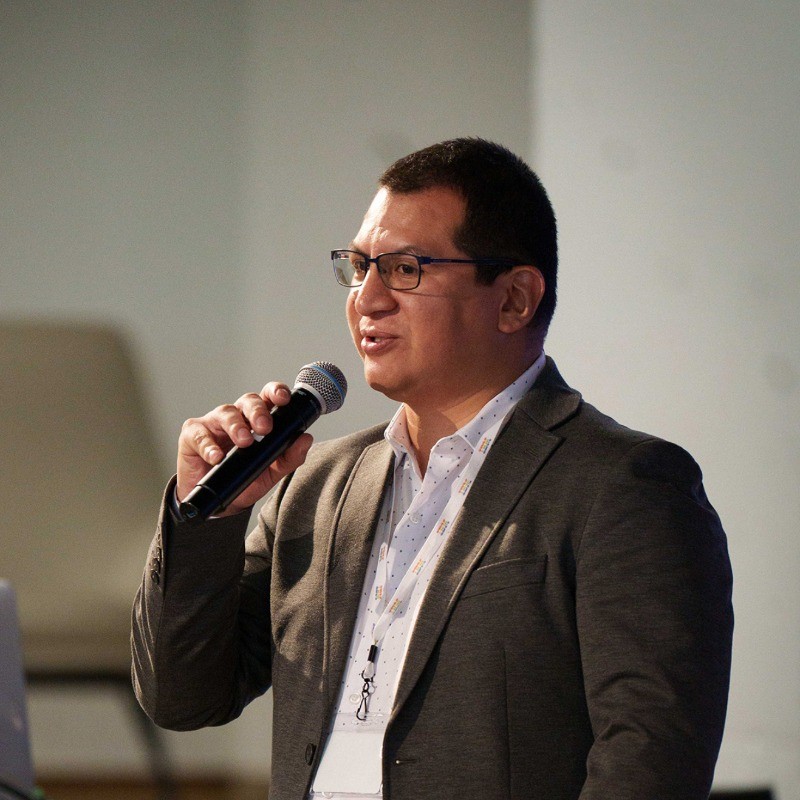
AI technical architect with deep experience in automation, software testing, and enterprise AI implementation. He has led generative AI initiatives and built solutions across SaaS, RPA, and AI-driven applications — bringing a builder and delivery lens to what makes agents testable, scalable, and ready for real business work.
Podcast Episodes
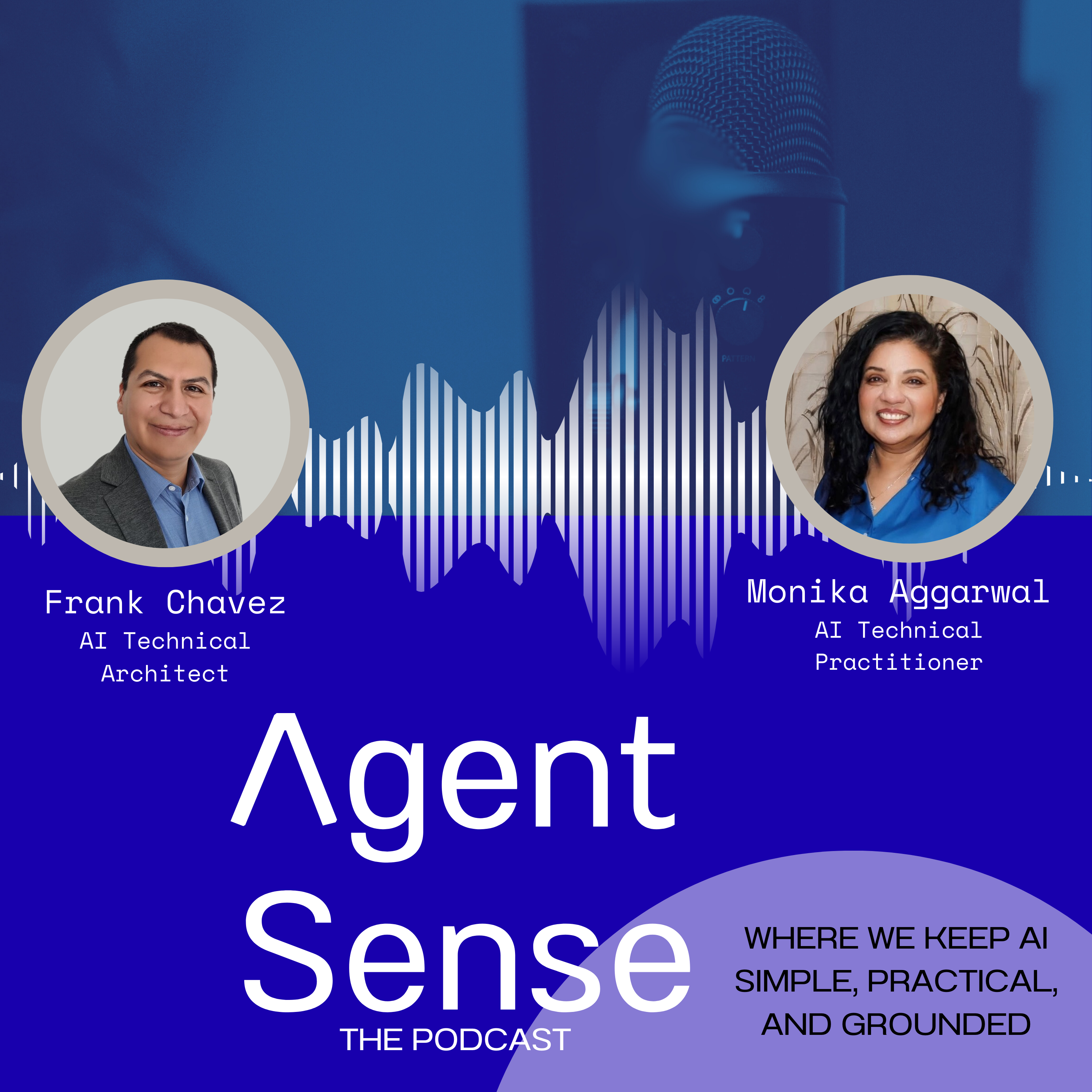
Brains and Guardrails: What Makes an AI Agent Enterprise-Ready?
Most enterprise AI pilots look impressive until they touch real systems, data, and accountability. What separates a prototype from a production-ready agent? Trust, guardrails, and the design decisions enterprises skip too early.
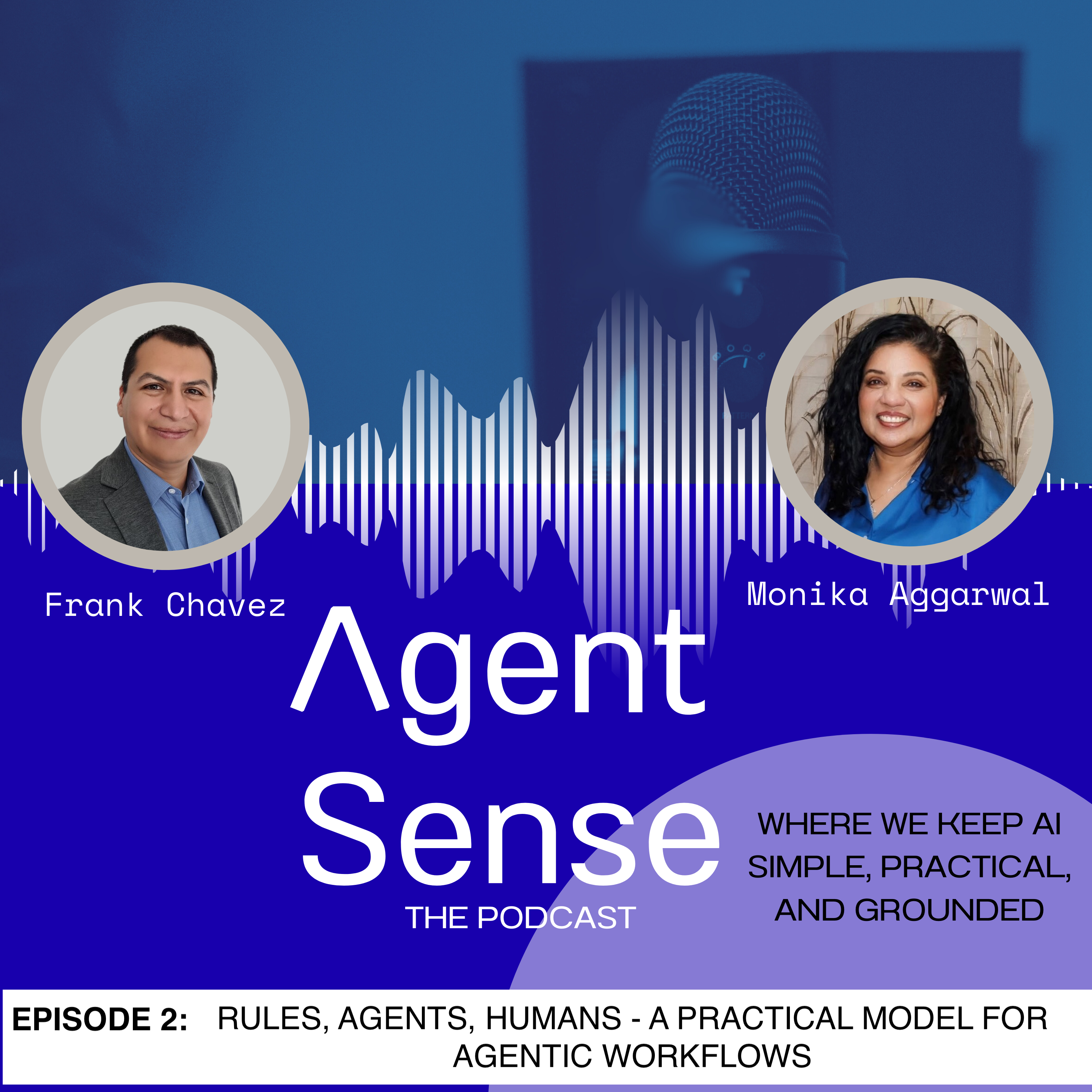
Rules, Agents, Humans — A Practical Model for Agentic Workflows
Not every decision should go to an agent. Using a banking onboarding scenario, this episode maps out when deterministic rules are the right answer, when agents add value, and where human judgment must stay in the loop.
Why IT Service Agents Fail in Production — A Data Readiness Problem
Agent failures in production are usually data failures, not model failures. Using an IT service ticketing example, this episode shows how incomplete ownership records and stale configuration data cause agents to act confidently on wrong information.
Autonomous Databases — Where Autonomy Helps and Where It Hurts
Autonomous databases can self-tune, self-heal, and self-secure — but autonomy at the data layer has limits. Where does it genuinely reduce operational risk, and where does it create new problems?
Integration Will Decide Enterprise AI — MCP and Agent-to-Agent
When agents need to reach enterprise systems and coordinate with each other, integration becomes the bottleneck. MCP standardizes agent-to-system connections. Agent-to-Agent (A2A) protocols let work move across the enterprise without custom wiring for every handoff.
.jpg)
MCP Gateway: The Control Layer for Enterprise Agents
Connecting agents to enterprise systems creates a new exposure: unmanaged access across HR, finance, IT, and operations. This episode covers how an MCP Gateway sits between agents and core systems, enforcing identity, policy, approvals, and audit trails before any action reaches production data.
The Evolution of Agents — From Chat to Computer Use
Agents are no longer just answering questions — they are navigating interfaces, executing tasks, and operating across runtime environments. What changes architecturally when agents move from chat to computer use, and what safety and observability requirements follow.
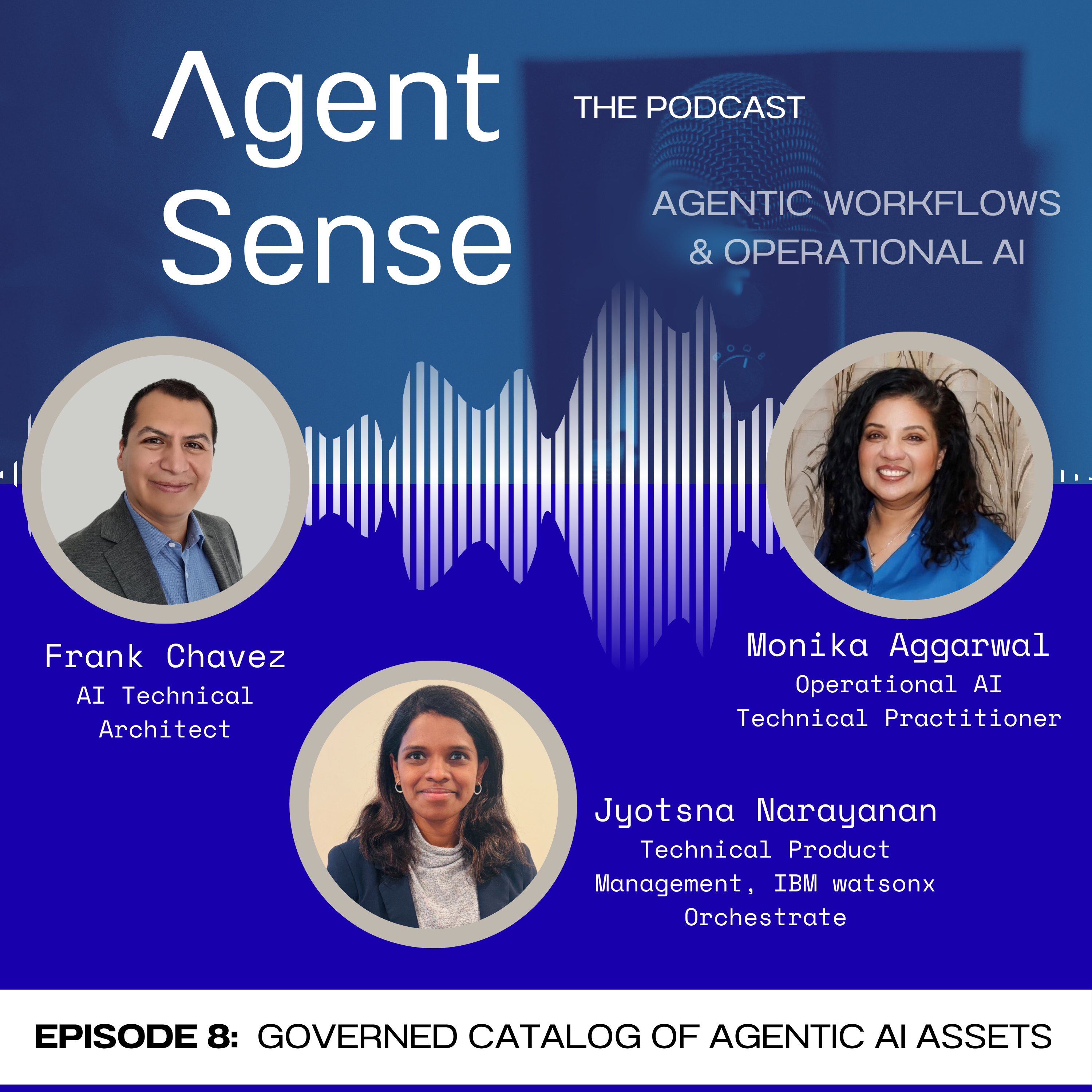
Governed Catalog of Agentic AI Assets
As AI scales past the pilot phase, teams build agents and tools in isolation — creating sprawl, duplicate builds, and unclear ownership. A governed catalog gives enterprises visibility, reuse, and trust signals before agents reach production.
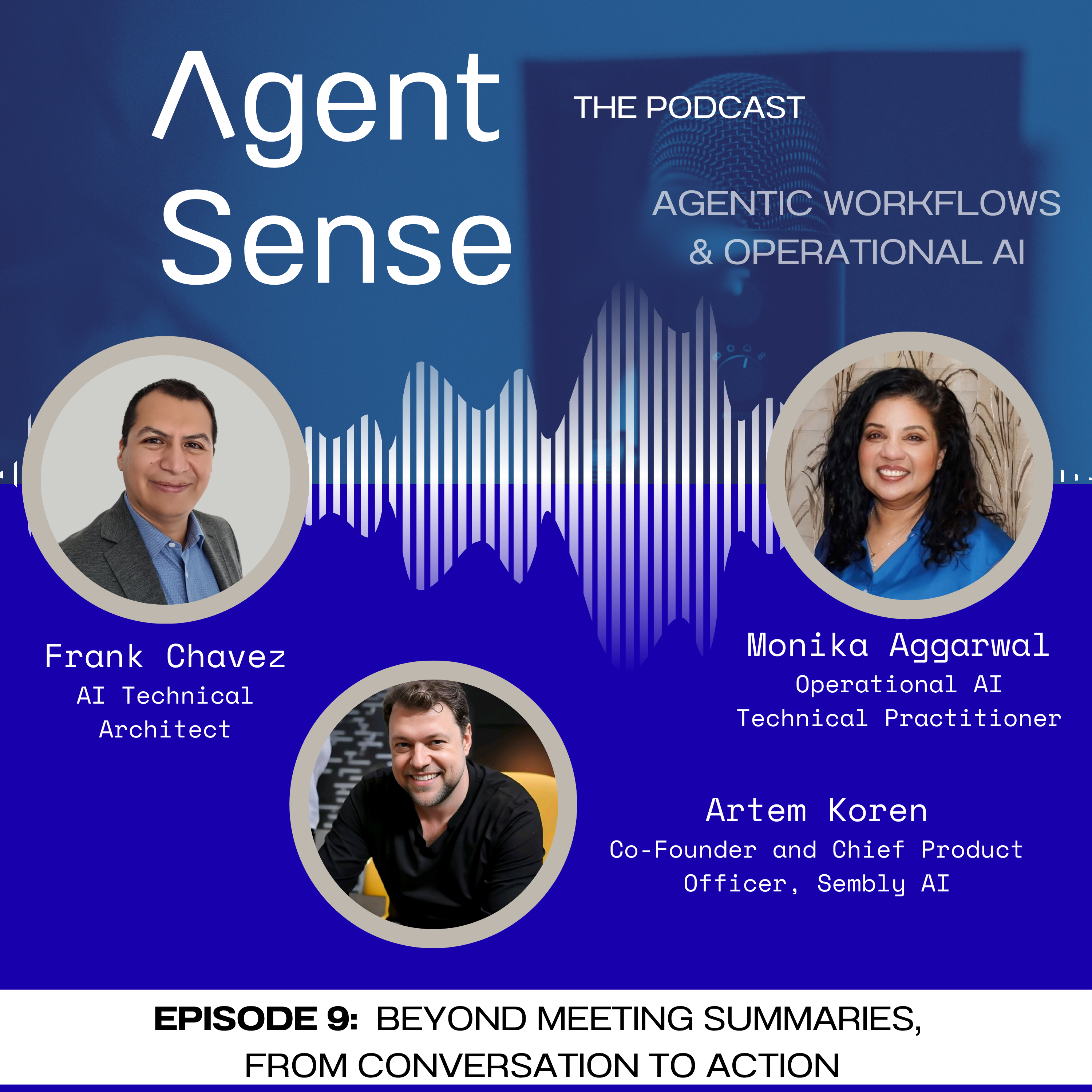
Beyond Meeting Summaries: From Conversation to Action
AI can summarize a meeting. Enterprise work starts after the summary. Artem Koren of Sembly AI explains how conversation intelligence moves beyond documentation into real workflow execution — CRM updates, follow-ups, task assignments, and cross-team actions with human judgment in control.
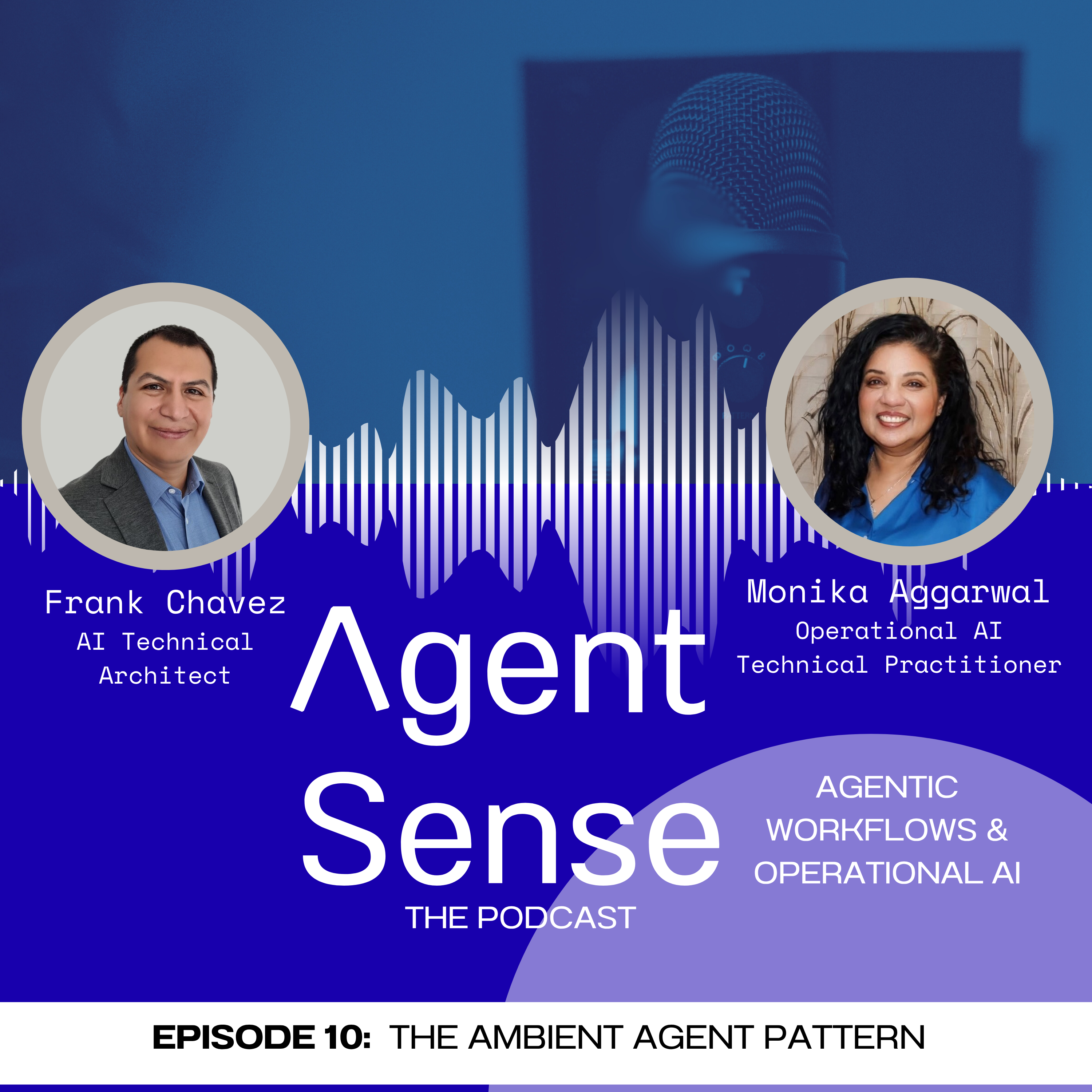
The Ambient Agent Pattern: AI That Works While You Sleep
Ambient agents don't wait to be asked. They run in the background — monitoring signals, detecting patterns, and taking action when conditions are met, with human judgment defining the boundaries of autonomy. This episode breaks down the ambient agent pattern and what it means to move enterprise AI from on-demand to always-on.
/Season2_Episode1.jpg)
Agent Memory is More Than RAG
Agents sit on massive amounts of enterprise data — but still ask users to repeat themselves. RAG alone doesn't fix this. Ran Aroussi walks through what a real agent memory system looks like: ingestion, distillation, graph relationships, and retrieval that reasons over context — not just similarity.
Agent Performance, Beyond Accuracy
An AI agent can be 95% accurate and still fail the business. It can give the right answer and still take too long, use the wrong tool, cost too much, or fail to complete the task. We talk with Jay Migliaccio, about how enterprises should measure and improve agent performance.
Guests
Practitioners and builders who have joined Agent Sense to share their field experience on enterprise AI.

Vitalii Duk 🔗
Founder & CEO, Dynamiq
Vitalii founded Dynamiq to make agentic AI practical and secure for organizations, simplifying the journey from prototype to production. He brings a builder's perspective on what it takes to move agents from impressive demos into reliable, observable enterprise systems.
Episode 7 — Chat to Computer Use
Jyotsna K Narayanan 🔗
Technical Product Management, IBM watsonx Orchestrate
Jyotsna leads product management for Domain and Agent Catalog at IBM watsonx Orchestrate. She brings deep expertise in AI interoperability and governed reuse — helping enterprises move beyond isolated AI pilots toward consistent, scalable agent operations.
Episode 8 — Governed Catalog of Agentic AI Assets
Artem Koren 🔗
Co-Founder & Chief Product Officer, Sembly AI
Artem co-founded Sembly AI to move conversation intelligence beyond transcription and summarization into real workflow execution. He brings a product and enterprise perspective on how AI turns meeting conversations into follow-ups, CRM updates, and system actions — with human judgment steering the outcomes.
Episode 9 — From Conversation to Action/RanAroussiPhoto.png)
Ran Aroussi 🔗
Founder, MUXI
Ran has spent more than 30 years building production systems and now focuses on helping enterprises deploy, manage, and operate agents at scale. He is the creator of yfinance, the most widely used open source financial data library, and founded MUXI — the open infrastructure that fills the gap between raw LLMs and production systems.
Season 2, Episode 1 — Agent Memory is More Than RAG
Jay Migliaccio 🔗
Technical Product Manager, IBM watsonx Orchestrate
Jay Migliaccio is a Technical Product Manager for IBM watsonx Orchestrate, where he focuses on building agentic solutions for enterprise customers. He has worked in product management and sales roles at various early-stage software companies and brings a practitioner's perspective on what it takes to measure, observe, and improve AI agent performance in production.
Season 2, Episode 2 — Agent Performance, Beyond Accuracy